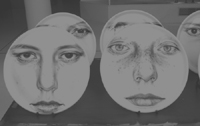
Personal reflections after a film…

Paul: For me it was similar. My son is still alive—forty‑five now—but the boy he was disappeared when he was fifteen. The schizophrenia‑like symptoms took him somewhere I can’t follow.
Jessie: You’ve said before it feels like living with a ghost.
Paul: Thirty years of it. A ghost of a son who once laughed, once argued, once dreamed. The film stirred that ache again, the ache of losing someone who still breathes.
Jessie: That’s a particular kind of sorrow. People don’t always understand that kind of loss.
Paul: They think grief requires a funeral. But grief can be a long corridor with no door at the end. But Shakespeare, his way was to write through it. That struck me. I’ve spent years trying to make sense of my son’s disappearance into illness, trying to understand something from it.
Jessie: The film seemed to suggest a way to hold sorrow without being crushed by it.
Paul: Yes. The ending especially. The way grief became a kind of offering, a way to honour the child rather than drown in the loss.
Jessie: I found myself thinking: maybe devastation can be rearranged. Not erased, but rearranged into something that lets us keep walking.
Paul: That’s what I felt too. That my son’s ghost doesn’t have to haunt me; he can accompany me. Not as absence, but as a presence transformed.
Jessie: And that love doesn’t vanish with the child. It just changes its shape, like water flowing.
Paul: Shakespeare said, “Give sorrow words.”
Jessie: And, “The rest is silence.” Knowing that silence, too, can be a kind of healing.
_________
Voice-over
Overtones of Ophelia. Her drowning, being pulled under by loss, was perhaps a metaphor for Hamnet succumbing to a fever. And the film adding themes of parental grief, absence, and giving sorrow shape through art.


No comments:
Post a Comment